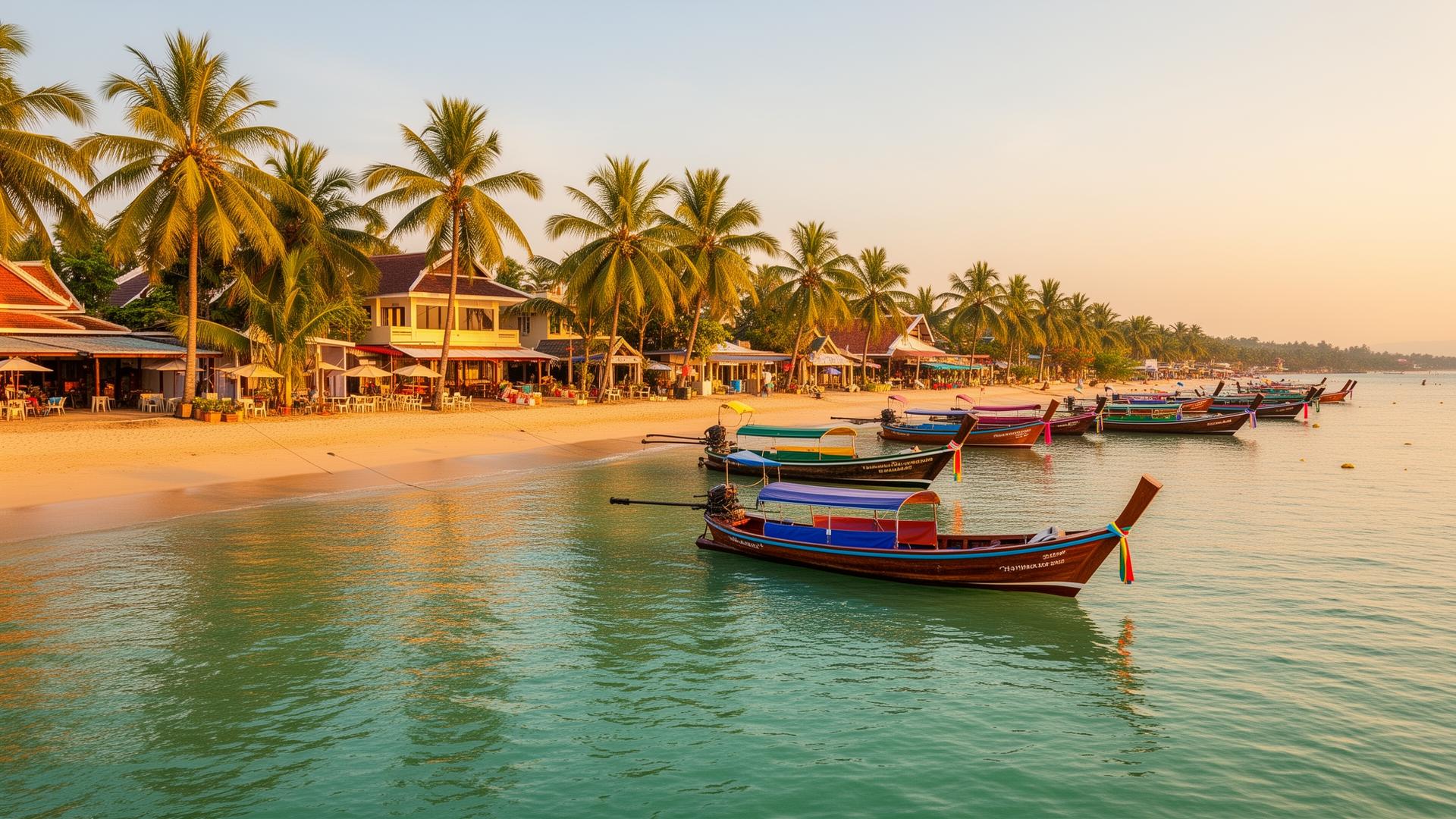
History of Cha-Am - From Fishing Village to Royal Coast
The history of Cha-Am, Phetchaburi Province: Dvaravati settlement, the 1923 Mrigadayavan Palace of King Vajiravudh, and the post-war rise of the beach.
History of Cha-Am - From Fishing Village to Royal Coast
Cha-Am (ชะอำ) is a small district on the western shore of the Gulf of Thailand, about 40 km north of Hua Hin and 170 km south of Bangkok. It sits inside Phetchaburi Province, one of the oldest inhabited parts of the country. Understanding the layers of that history is useful for anyone thinking about buying property in Thailand here rather than in a more famous resort town.
Dvaravati and Khmer roots
Archaeological work in Phetchaburi has produced Dvaravati-era artefacts (roughly the 6th to 11th century), and the coastal plain south of the Phetchaburi River was a natural stopping point between the Mon-Dvaravati cities inland and the Malay Peninsula. During the 11th to 13th centuries the Khmer Empire extended its administration this far south; the five-pranged sanctuary at Wat Mahathat Worawihan in Phetchaburi city is the most visible reminder of that period.
An Ayutthaya-period fishing coast
Through the Ayutthaya kingdom (1351-1767) the Cha-Am shoreline was a modest string of fishing hamlets. Salt evaporation ponds and small rice paddies filled the flat land behind the beach; the pier villages traded dried fish, shrimp paste and coconut sugar up the coast to Phetchaburi and, in season, to Ayutthaya itself. The area was too shallow for large trading vessels, which is one reason it never grew into a port town.
The royal era begins - Mrigadayavan Palace, 1923
Cha-Am's modern identity begins with the Thai royal family. In 1923 King Vajiravudh (Rama VI) commissioned Mrigadayavan Palace - a set of sixteen airy teak pavilions raised on piers - as a seaside residence. It stands today at the northern edge of Cha-Am, inside Camp Rama VI, and remains open to visitors. The nearby Klai Kangwon Palace, built for King Prajadhipok (Rama VII) in 1929, extended the royal beach tradition southward. These two projects turned a quiet fishing coast into "the royal coast" of Thailand.
Post-war road, rail and weekend Bangkok
The southern railway had reached Phetchaburi by 1903, but it was the post-war widening of Phetkasem Highway (Route 4) in the 1960s that put Cha-Am within a comfortable day's drive of Bangkok. Middle-class Bangkok families began renting simple beach bungalows on weekends; small hotels and open-air seafood restaurants followed along Ruamchit Road. Cha-Am kept its Thai character precisely because it was cheaper, quieter and less international than Hua Hin next door.
The 1990s to today
Condominium law in Thailand, enacted in 1979 and refined through the Condominium Act B.E. 2522, made foreign ownership of apartments possible within the 49 percent quota - see our condominium quota guide. From the late 1990s Scandinavian, German and British buyers began appearing in Cha-Am, drawn by prices roughly a third below Hua Hin. The expat community is still small by Thai standards, which most residents count as a feature, not a limitation.
What remains of the past
The fishing fleet still leaves the pier at dawn. Wat Neranchararam and Wat Khao Nang Panthurat, both centuries old, still hold their morning alms rounds. The salt pans between Cha-Am and Phetchaburi are still worked by hand in the dry season. This continuity - a working Thai town with a royal palace at one end and quiet beach neighbourhoods at the other - is the real reason people choose to live here.
Frequently Asked Questions
How old is Cha-Am as a settlement?
The wider Phetchaburi coast has been inhabited since the Dvaravati period (6th to 11th century), with Khmer influence from the 11th to 13th centuries. Cha-Am itself grew as a chain of small fishing hamlets during the Ayutthaya kingdom (1351-1767) and only became known nationally after 1923.
Why is Cha-Am called part of the royal coast?
King Vajiravudh (Rama VI) built Mrigadayavan Palace at the northern edge of Cha-Am in 1923, and King Prajadhipok (Rama VII) built Klai Kangwon Palace in nearby Hua Hin in 1929. These two royal seaside residences gave the whole coast its royal reputation.
Can you visit Mrigadayavan Palace today?
Yes. The palace stands inside Camp Rama VI at the northern edge of Cha-Am and is open to the public. It is one of the largest surviving groups of teak royal buildings in Thailand - sixteen pavilions raised on piers, connected by covered walkways, still much as they were in 1923.
When did foreigners start buying property in Cha-Am?
The Condominium Act of B.E. 2522 (1979) opened foreign ownership within a 49 percent building quota. Scandinavian, German and British buyers began arriving in noticeable numbers from the late 1990s, drawn by prices roughly a third below Hua Hin. See our condominium foreign quota guide for detail.
How did Cha-Am stay quieter than Hua Hin?
Hua Hin received the railway, the second royal palace and the international golf infrastructure, so hotels and expat services concentrated there. Cha-Am kept simpler beach hotels and a working fishing pier, which held prices down and preserved the Thai family-holiday character of the town.
Is the old fishing economy still active?
Yes. The Cha-Am fleet still leaves the pier before dawn and lands its catch at the market on Ruamchit Road each morning. The salt evaporation pans between Cha-Am and Phetchaburi are also still worked by hand in the dry season from roughly February to May.
Explore More
Locations
Cha-am
Discover property opportunities in Cha-am, a peaceful beachside town in Phetchaburi province, Thailand. Affordable villas, condos, and land near the Gulf of Thailand.
Hua Hin
Explore property in Hua Hin, Thailand's premier royal resort town. Luxury villas, modern condos, and investment land on the Gulf of Thailand coast.
Guides
Can Foreigners Buy Property in Thailand? Complete Guide
Yes for condos within the 49 percent quota, no for land. Pillar guide to foreign property ownership in Thailand: freehold, leasehold and safe alternatives.
Living in Cha-Am - Expat Lifestyle Guide
Cha-Am for expats: royal-coast character vs Hua Hin, climate month by month, cost of living in THB, healthcare, internet, beach, Forest Park and getting there.
Related Guides
Affordable Property in Cha-am
Discover affordable property options in Cha-am, Thailand. From budget condos to starter villas, find your ideal home at competitive prices. From Chaam.org.
Luxury Villas in Cha-am
Discover luxury villas in Cha-am with private pools, tropical gardens, and beachfront access at prices below Hua Hin. On the Royal Coast since 2014.
Property for Sale in Cha-am
Browse all property for sale in Cha-am, Thailand. Villas, condos, and land — find your perfect Thai home. From Chaam.org, on the Royal Coast since 2014.
Cost of Living in Cha-am
Detailed breakdown of the cost of living in Cha-am, Thailand. Housing, food, healthcare, and entertainment expenses for expats. From Chaam.org.
Get Property Offers in Cha-am
Leave your details and we'll send you curated property options tailored to your needs.