Festivals in Cha-Am - Songkran, Loy Krathong and the Year
The festival year in Cha-Am, Phetchaburi: Songkran (13-15 April) as cleansing and respect for elders, and Loy Krathong on the November full moon.
Festivals in Cha-Am - Songkran, Loy Krathong and the Buddhist Year
Two Thai festivals shape the year in Cha-Am: Songkran in mid-April and Loy Krathong at the November full moon. Both are older and quieter than their tourist reputation suggests, and both are still centred on merit-making at the temple, respect for elders, and gratitude to the water. The Buddhist observances between them fill in the rest of the calendar.
Songkran (13-15 April) - cleansing and respect for elders
Songkran (สงกรานต์) is the Thai solar new year and, more importantly, a family occasion. It begins at the temple: people bring food to the monks in the morning, take part in the bathing of Buddha images, and pour scented water gently over the hands of parents and grandparents. The gesture is rot nam dam hua - a request for blessing and a mark of respect. The community-wide water splashing on the streets is a later, joyful expansion of the same idea: water as a symbol of cleansing at the turn of the year, at a time when Phetchaburi Province is at its hottest.
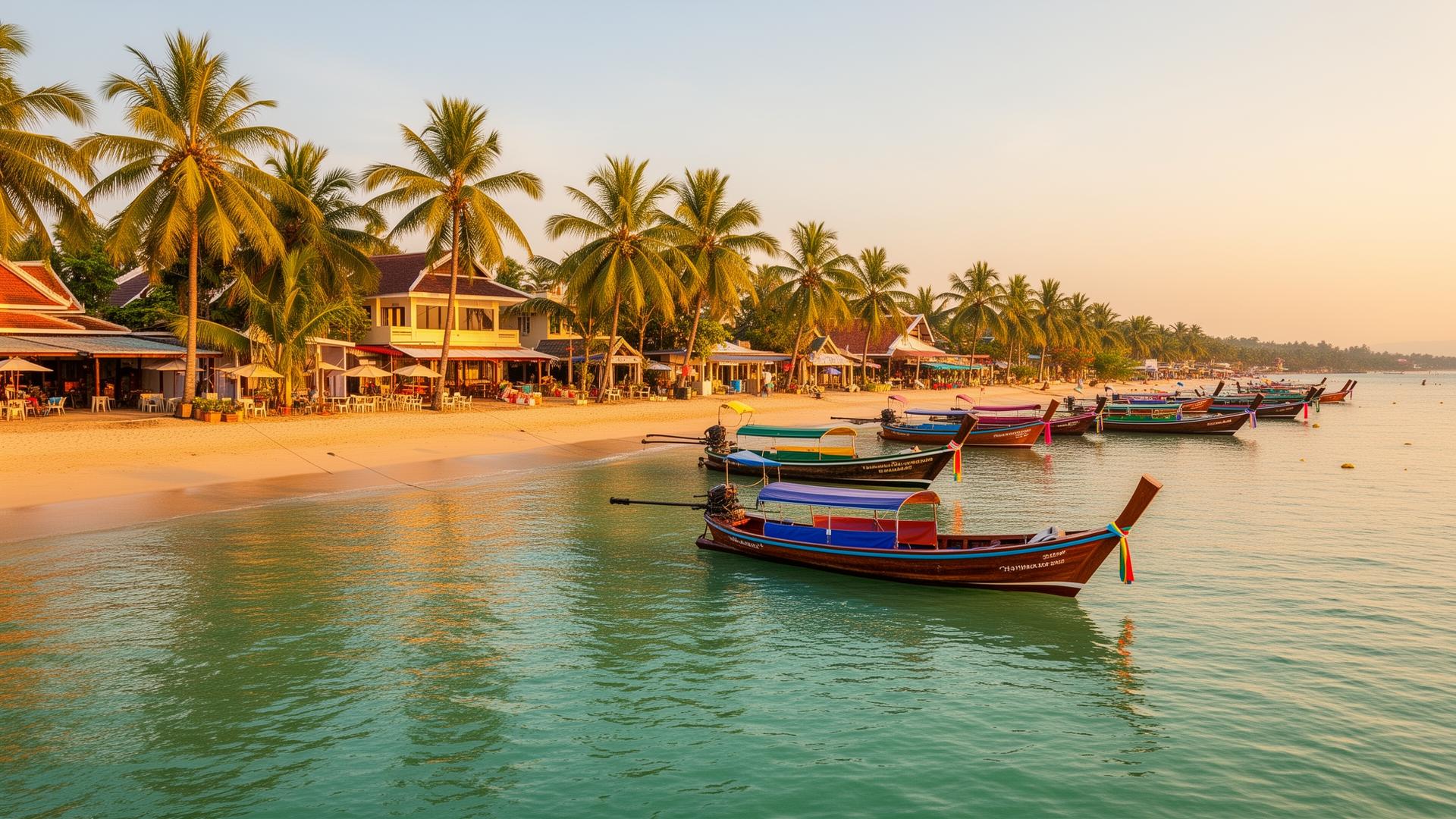
In Cha-Am the beach road (Ruamchit Road) becomes the informal centre from around midday on 13 April. Families and neighbours take turns with buckets and hoses; foreign residents are welcomed as long as they play in the same spirit. Wat Neranchararam holds merit-making rounds through the morning, and it is worth going there first before the road becomes wet.
Loy Krathong (full moon, 12th lunar month - usually November)
Loy Krathong (ลอยกระทง) falls on the full moon of the twelfth month of the Thai lunar calendar, which in most years lands in November. The gesture is simple: a small floating raft (krathong) made of banana trunk, banana leaf, flowers, a candle and three sticks of incense is set on the water at dusk. The offering is directed to Phra Mae Khongkha (พระแม่คงคา), the mother goddess of rivers and waters, in gratitude for a year of using her water and in apology for having polluted it.
Cha-Am families float krathong at the beach itself, along the estuary at the northern end of town, and at the small canal that runs behind Ruamchit Road. Larger public floating takes place at Wat Neranchararam and, further afield, on the Phetchaburi River in the provincial capital. Sky lanterns are far less common here than in Chiang Mai and are discouraged near the beach because of aviation traffic to Hua Hin Airport.
Buddhist observance days that shape the year
Three lunar-calendar days are national holidays and are marked at Cha-Am temples with a candlelit circumambulation (wian tian) - three times clockwise around the ordination hall - in the early evening:
- Makha Bucha (full moon of the third lunar month, February or March) - commemorates the spontaneous gathering of 1,250 disciples of the Buddha.
- Visakha Bucha (full moon of the sixth lunar month, May or June) - marks the birth, enlightenment and passing of the Buddha.
- Asalha Bucha (full moon of the eighth lunar month, July) followed the next day by Khao Phansa, the start of the three-month Buddhist Lent.
Alcohol sales are prohibited on all four days by national law.
Local and civic dates
Cha-Am District holds a modest Cha-Am Seafood Festival in the cool season (usually late January or February), based at the beach; a Chinese-Thai Lunar New Year observance at the local shrine in late January or February; and community events tied to the royal King Vajiravudh Memorial Day on 25 November, given the town's link to Mrigadayavan Palace - see the history article.
Joining in as a foreign resident
None of these observances require formal invitation. Dress modestly at the temple, remove your shoes before entering any building, and never place a krathong containing plastic or foam - only banana leaf and biodegradable material is welcome. For a broader picture of expat life around the calendar, see our living in Cha-Am guide and the temples article.
Frequently Asked Questions
When exactly does Songkran fall in Cha-Am?
The official public holidays are 13, 14 and 15 April every year. Cha-Am usually stretches this by a day on either side, with beach-road water play strongest on the 13th and 14th. Merit-making at Wat Neranchararam happens in the morning of the 13th before the road becomes wet.
When is Loy Krathong in Cha-Am?
On the full moon of the twelfth lunar month, which in most years falls in November. The date shifts by about eleven days each year against the solar calendar. Floating starts at dusk and continues for two or three hours as families arrive after dinner.
What is a krathong meant to symbolise?
It is an offering to Phra Mae Khongkha, the mother goddess of rivers and waters, in gratitude for a year of using her water and in apology for having polluted it. Some people also place a strand of hair or a coin inside, symbolising a release of the past year troubles.
Is it respectful for foreign residents to take part?
Yes. Songkran water play, temple visits and floating a krathong are all activities that Thai families welcome foreigners into, as long as the gestures are done with the same intent. Modest dress at the temple, no plastic in the krathong, and gentle water rather than ice-cold water on elders.
What are the four Buddhist observance days?
Makha Bucha in February or March, Visakha Bucha in May or June, Asalha Bucha in July, and Khao Phansa the day after. All four are national public holidays with nationwide alcohol sale prohibitions and candlelit circumambulations at temples in the early evening.
Are sky lanterns released in Cha-Am for Loy Krathong?
Very rarely, and they are actively discouraged near the beach because Cha-Am sits under the approach path to Hua Hin Airport. Thai Aviation authorities restrict lanterns in controlled airspace. The water-based krathong remains the local tradition.
Explore More
Locations
Cha-am
Discover property opportunities in Cha-am, a peaceful beachside town in Phetchaburi province, Thailand. Affordable villas, condos, and land near the Gulf of Thailand.
Hua Hin
Explore property in Hua Hin, Thailand's premier royal resort town. Luxury villas, modern condos, and investment land on the Gulf of Thailand coast.
Guides
Can Foreigners Buy Property in Thailand? Complete Guide
Yes for condos within the 49 percent quota, no for land. Pillar guide to foreign property ownership in Thailand: freehold, leasehold and safe alternatives.
Living in Cha-Am - Expat Lifestyle Guide
Cha-Am for expats: royal-coast character vs Hua Hin, climate month by month, cost of living in THB, healthcare, internet, beach, Forest Park and getting there.
Related Guides
Affordable Property in Cha-am
Discover affordable property options in Cha-am, Thailand. From budget condos to starter villas, find your ideal home at competitive prices. From Chaam.org.
Luxury Villas in Cha-am
Discover luxury villas in Cha-am with private pools, tropical gardens, and beachfront access at prices below Hua Hin. On the Royal Coast since 2014.
Property for Sale in Cha-am
Browse all property for sale in Cha-am, Thailand. Villas, condos, and land — find your perfect Thai home. From Chaam.org, on the Royal Coast since 2014.
Cost of Living in Cha-am
Detailed breakdown of the cost of living in Cha-am, Thailand. Housing, food, healthcare, and entertainment expenses for expats. From Chaam.org.
Get Property Offers in Cha-am
Leave your details and we'll send you curated property options tailored to your needs.